Why Your Pan Matters
Scrambled eggs are particularly sensitive to sudden changes in temperature. If the pan has uneven hot spots, some parts of the egg may overcook while others remain runny.
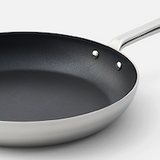
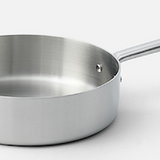
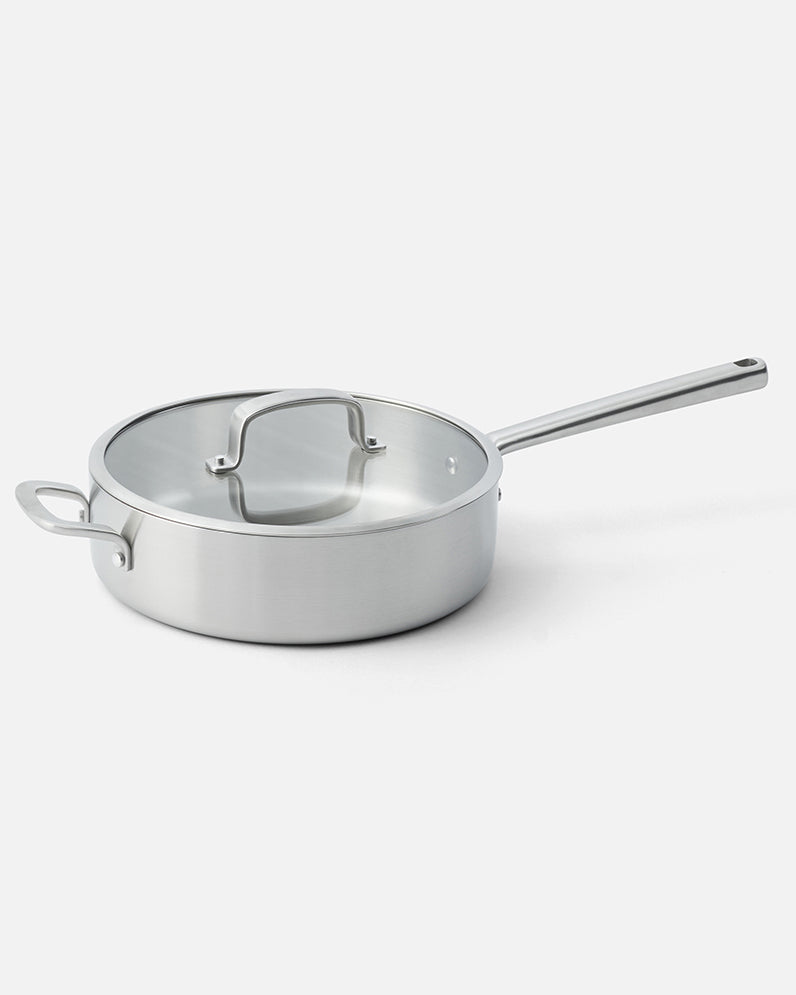
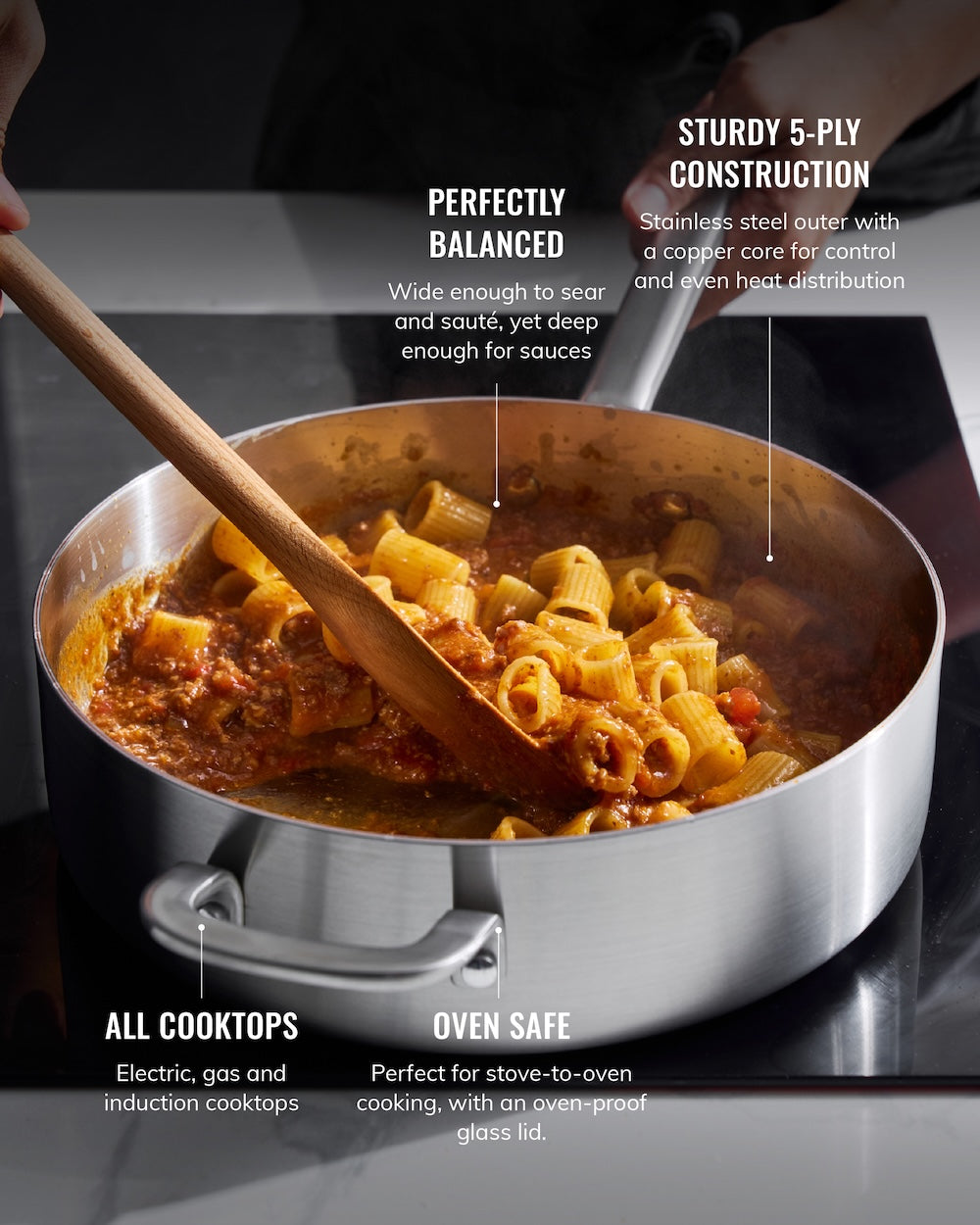
A quality stainless steel pan gives you:
- Even heat distribution for consistent cooking
- Excellent control when moving between high and low temperatures
- A responsive cooking surface for on-and-off heat techniques
- A durable, coating-free surface designed for everyday use
Stainless steel also rewards good technique. Preheating the pan correctly, adding enough butter or oil and controlling the heat will help prevent sticking without relying on a non-stick coating.
How to Stop Scrambled Eggs Sticking to Stainless Steel
For the best results, match your pan preparation to the cooking method.
For cold-start and low-heat eggs, use enough butter and keep the eggs moving as they gradually begin to set.
For fluffy, high-heat eggs, preheat the pan first, then add butter or oil before pouring in the eggs. Avoid adding eggs to a dry stainless steel surface, and don’t let the pan become so hot that the butter burns.
Most importantly, remove the eggs just before they reach your preferred texture. They will continue cooking from the residual heat in the pan.
Which Method Is Best?
There is no single perfect temperature for scrambled eggs. It depends entirely on the texture you want.
- Cold start: soft and delicate
- Low heat: creamy and custardy
- High heat: light and fluffy
- On-and-off heat: soft, controlled and slightly more textured
Once you understand how temperature affects the eggs, your stainless steel pan becomes a precision cooking tool. With the right heat, a little butter and good timing, beautifully cooked scrambled eggs are easy to achieve without a chemical non-stick coating.