
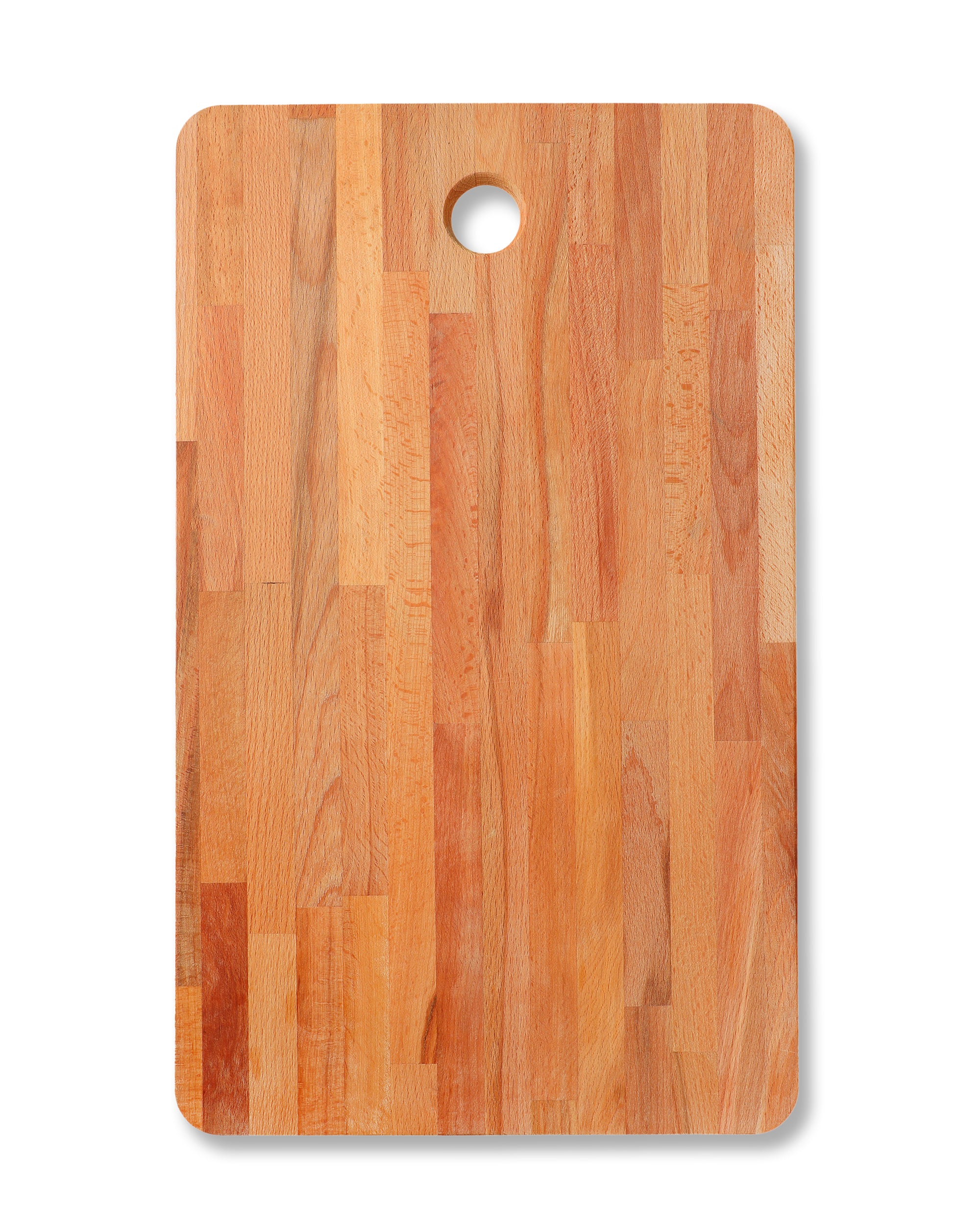
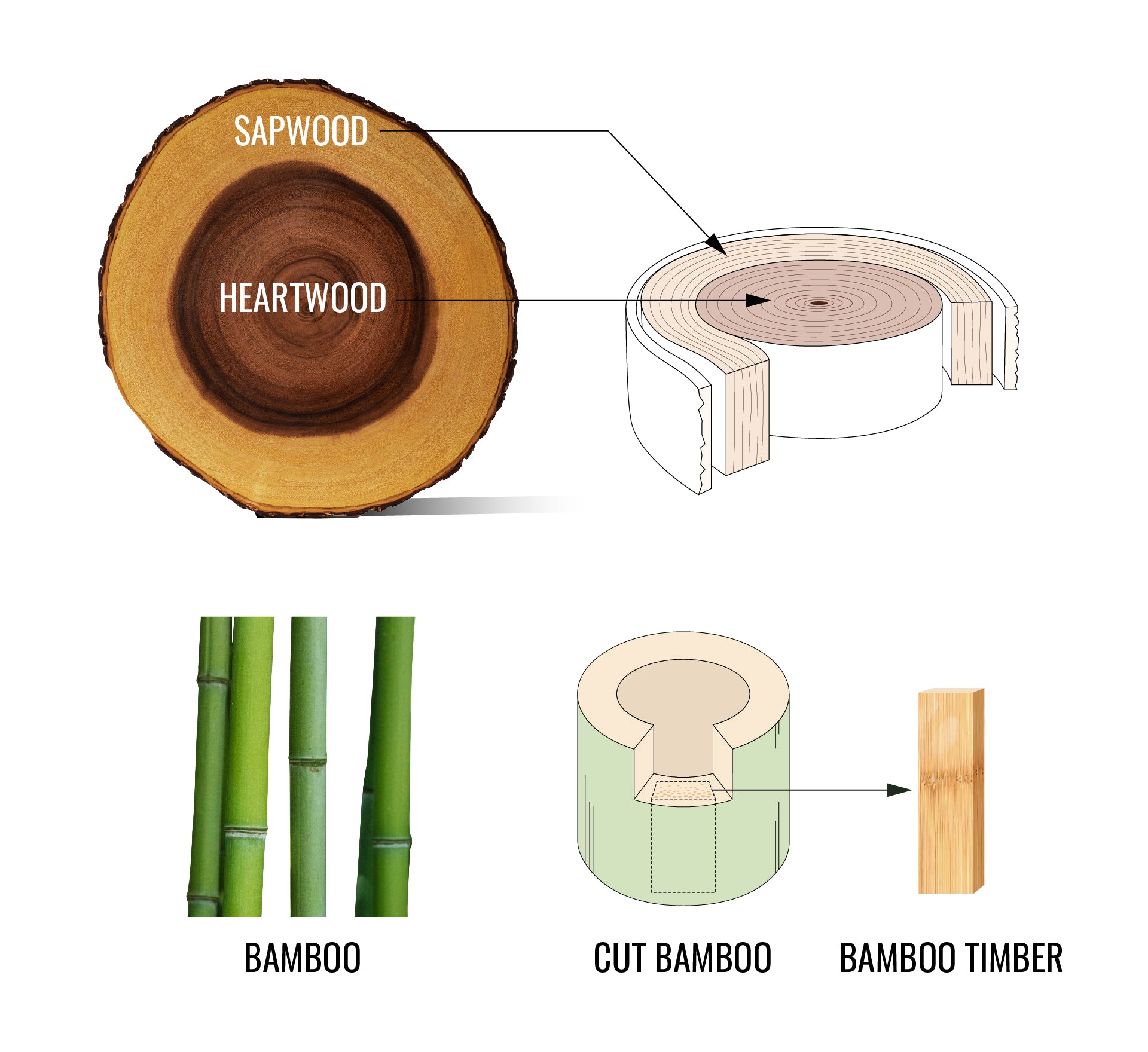
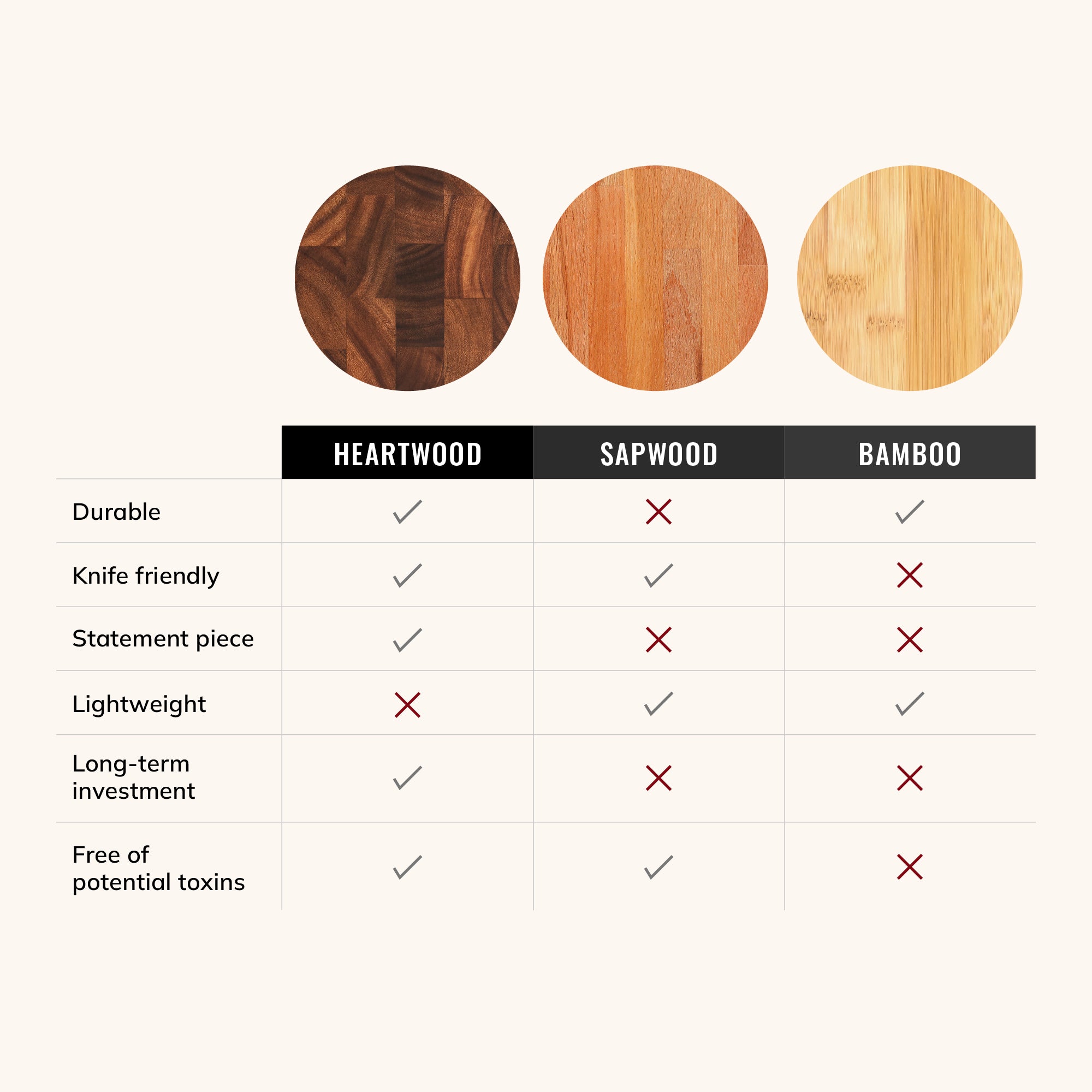
SAPWOOD
Sapwood comes from the outermost parts of a tree, where it transports nutrients from the roots to the leaves.
- Lighter in colour and with a higher moisture content than heartwood, it’s less dense, is softer and more susceptible to decay.
- When used for chopping boards, it provides a lighter, often more budget-friendly option than other woods.
- It is overall more prone to damage and can absorb water, leading to staining and warping.
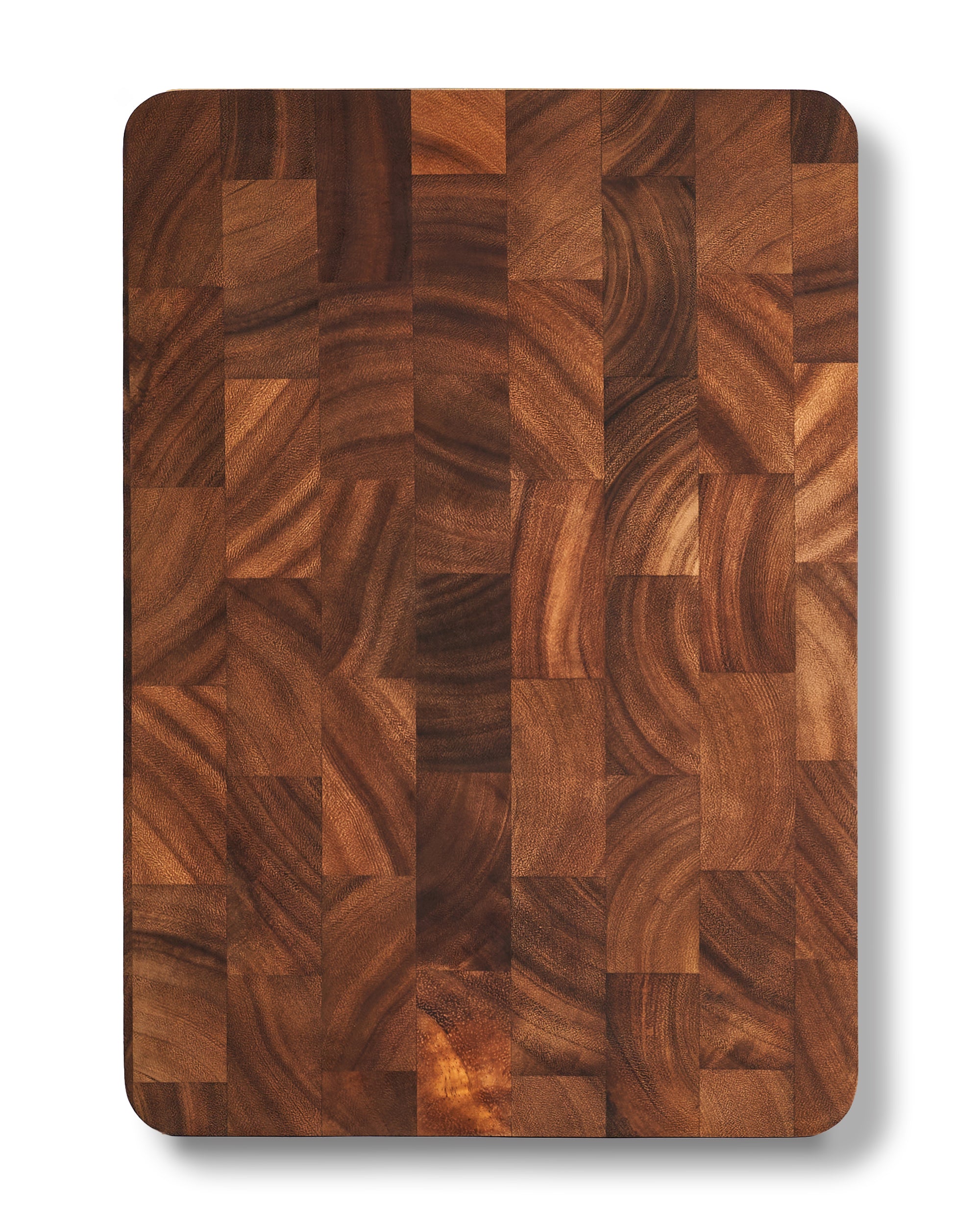
HEARTWOOD
Heartwood is the inner, denser part of a tree, forming as the tree ages.
- It’s darker in colour (deep red, brown, purple or blackish, depending on the species) as it contains resins and other substances.
- Dense, hard and decay-resistant, heartwood provides structural support to a tree and is therefore incredibly strong.
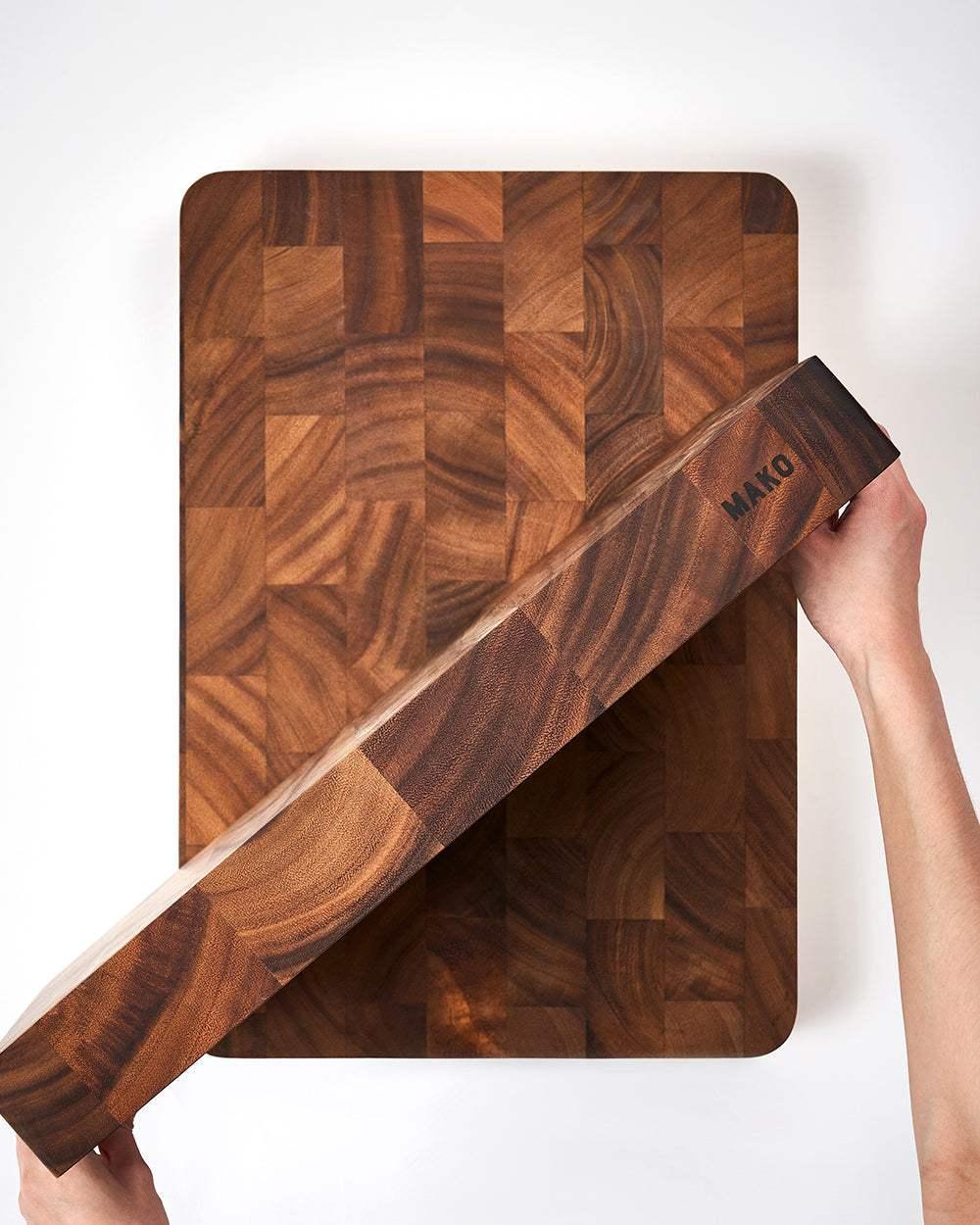
- It makes beautiful boards that are moisture-resistant, highly durable and can even have self-healing properties that protect from knife blade damage.
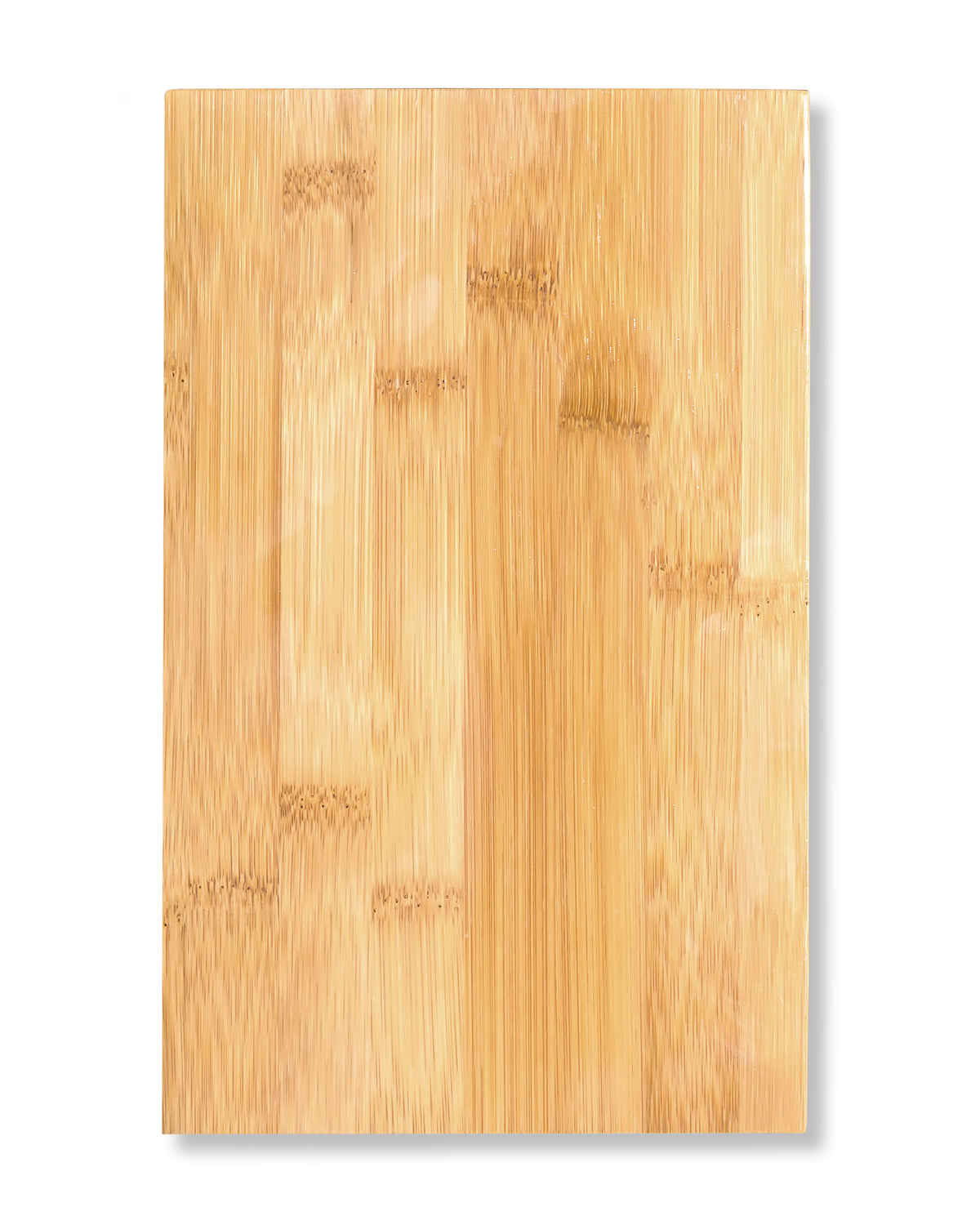
Bamboo
Bamboo is a grass, not a wood.
- Because the plant is fast growing, it’s eco-friendly and highly affordable.
- Bamboo is relatively non-porous, scratch resistant and care-wise, more forgiving than wood (you can dish wash bamboo boards, eg).
- But bamboo contains silica which wears down knives more than wood.
- Although generally a light, hard, durable material, bamboo boards are made by laminating pieces together and this means boards wear out faster than wooden ones. Plus they can contain toxins from the adhesives used.
HOW THEY COMPARE

$389.00
39% Off

$638.00$389.00



MORE READING

Steak with Café de Paris Butter
This Steak with Café de Paris Butter recipe is rich, savoury and seriously restaurant-worthy. Jui...
Continue reading

Shakshuka
This easy shakshuka recipe features soft-set eggs cooked in a rich spiced tomato and capsicum sau...
Continue reading

Vodka Chicken Parma Sandwich
This Vodka Chicken Parma Sandwich is a next-level twist on a pub classic, featuring crispy schnit...
Continue reading