
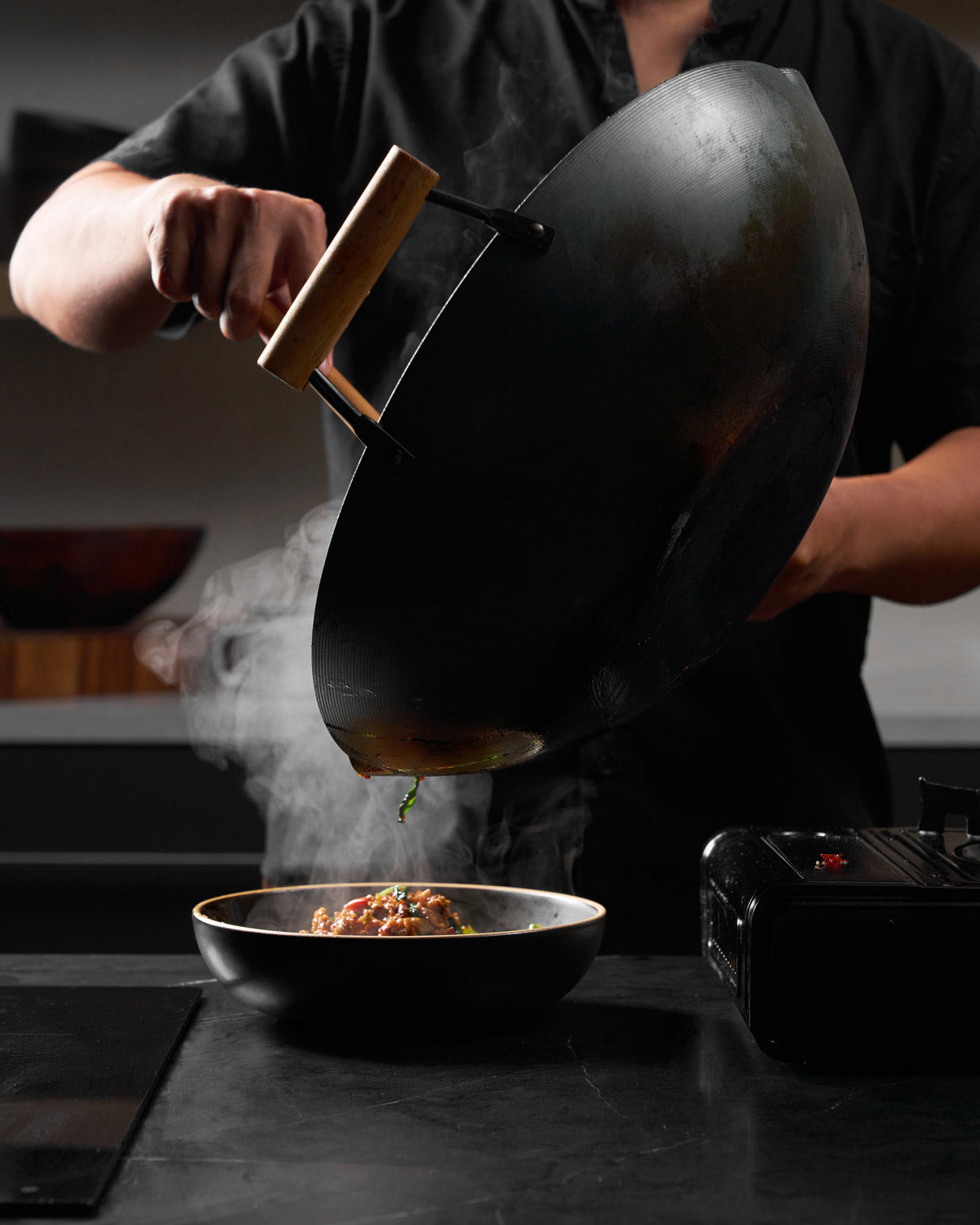
Pro-level equipment
How to cook with black carbon steel
Hardcore home cooks and professional chefs are staunch about carbon steel pans and woks. “They’re the best” they say. And, “they make you a better cook.” Big claims! These are our mantras too and if you feel daunted by using carbon steel, we’re here to tell you the learning curve isn’t steep. Carbon steel honestly gives you superior control and really does make you a better cook
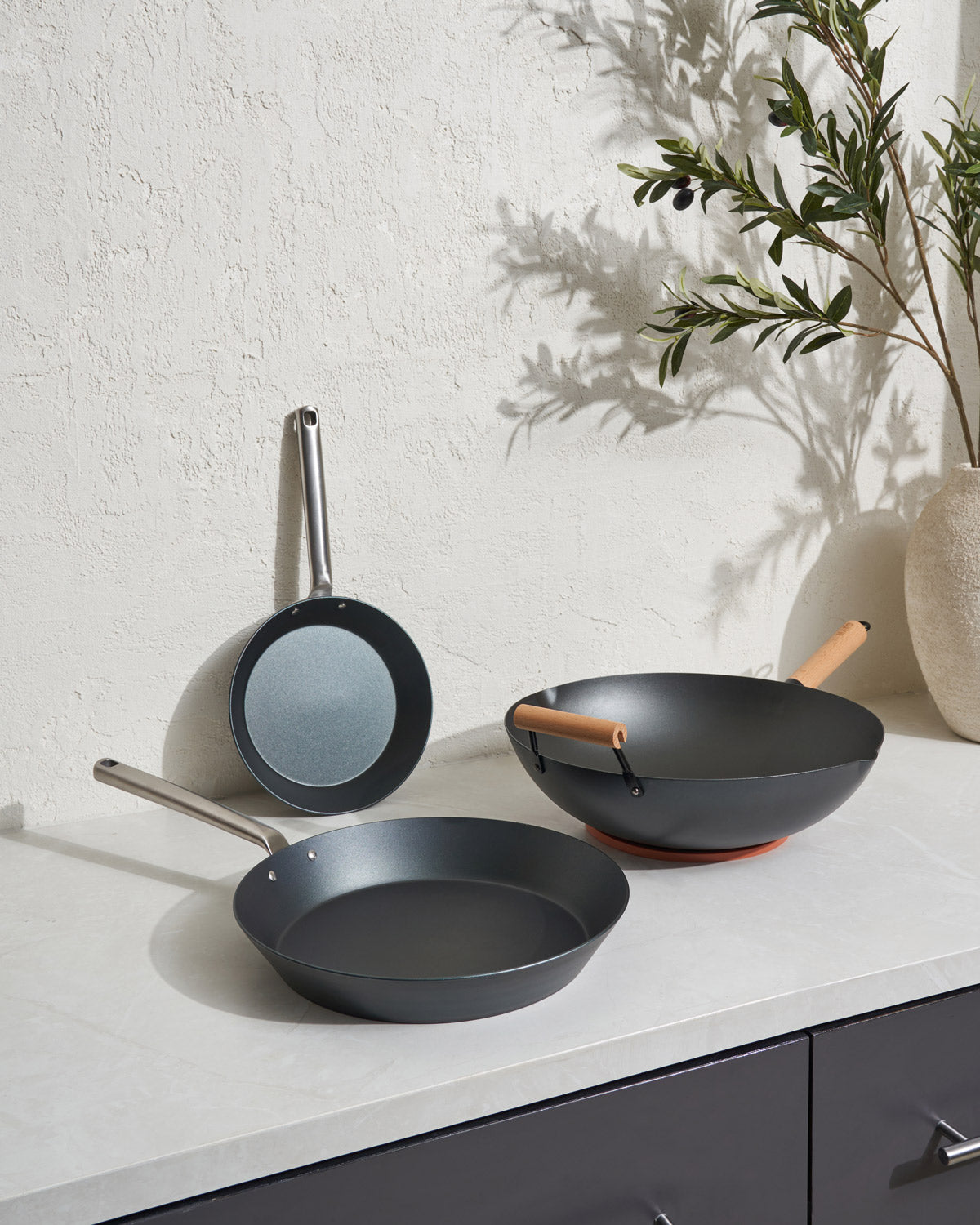
What even IS carbon steel?
Carbon steel is made from iron and carbon and its benefit over, say, cast iron, is that it’s at least half the weight, making it easier to manoeuvre. It has the same high heat searing capabilities as cast iron but is more responsive when you turn the heat down (making it less likely to burn or overcook your food).
Other things to note:
- Unlike stainless steel, it builds up a natural patina over time, giving the cooking surface incredible natural non-stick qualities.
- Carbon steel is highly durable; with care, pans will last a lifetime.
- Carbon steel is reactive, meaning it’s not well-suited to cooking highly acidic ingredients for long times (e.g. tomatoes, vinegar and wine). A well-seasoned surface goes a long way to protecting from damage, but it’s something to keep in mind when using carbon steel.
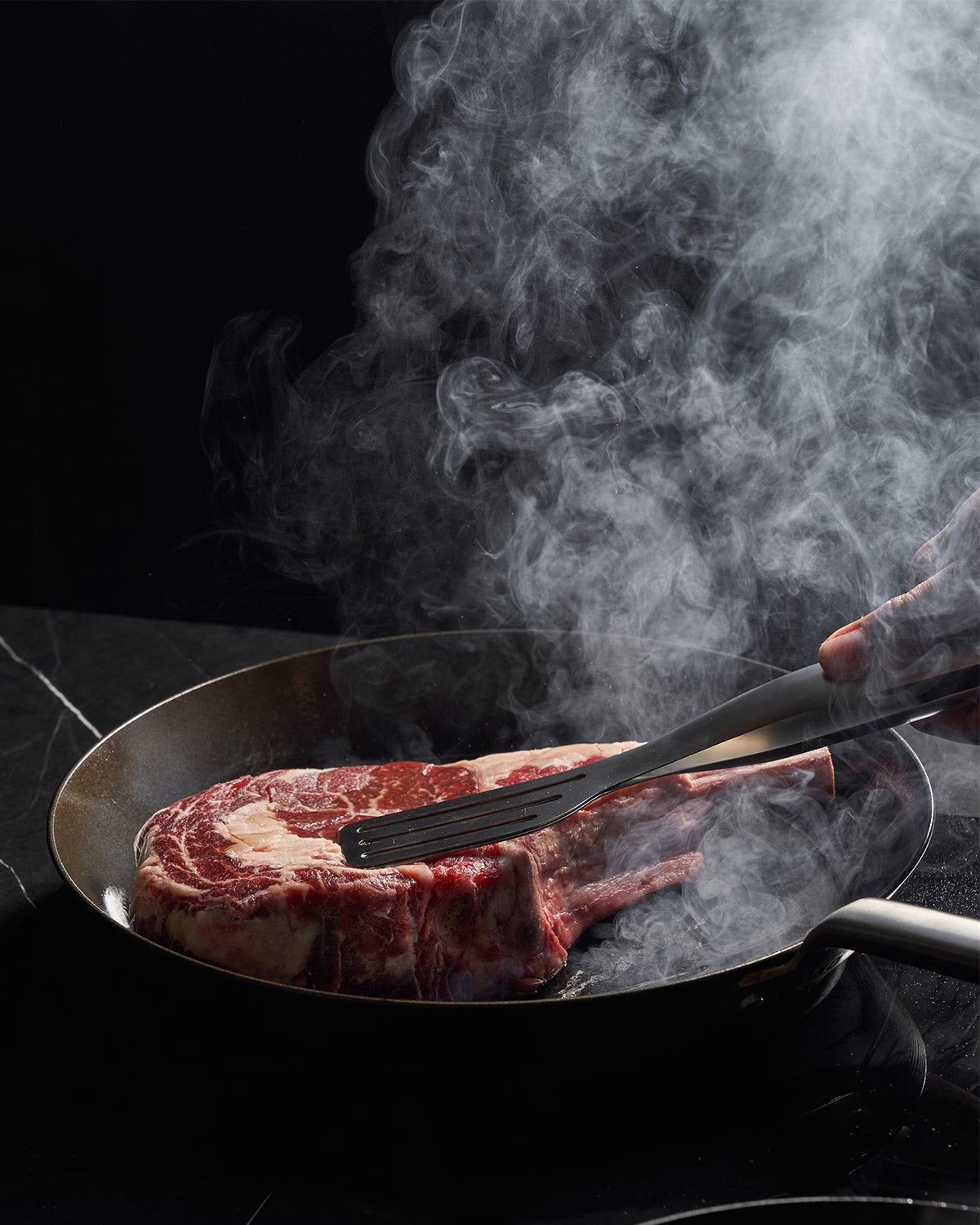
What about ‘seasoning’?
Carbon steel requires seasoning. This develops a naturally non-stick cooking surface (the ‘patina’). To break the back of that initial seasoning process you can buy pre-seasoned, or ‘blackened’, carbon steel pans and woks. These kick-start the seasoning process, meaning you can use the pans immediately and focus your efforts on maintenance instead.
Best cooking methods
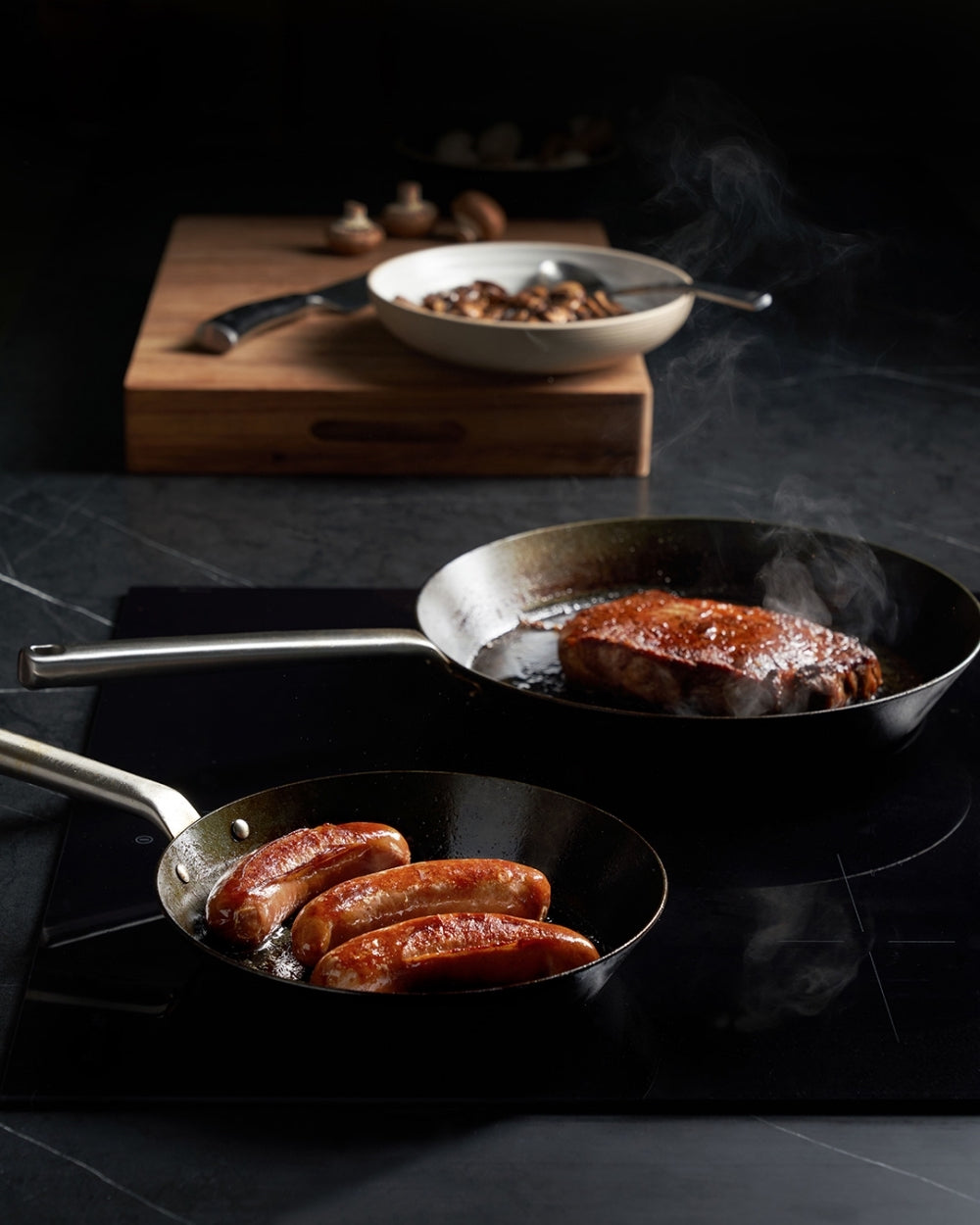
- Searing
- Stir-frying
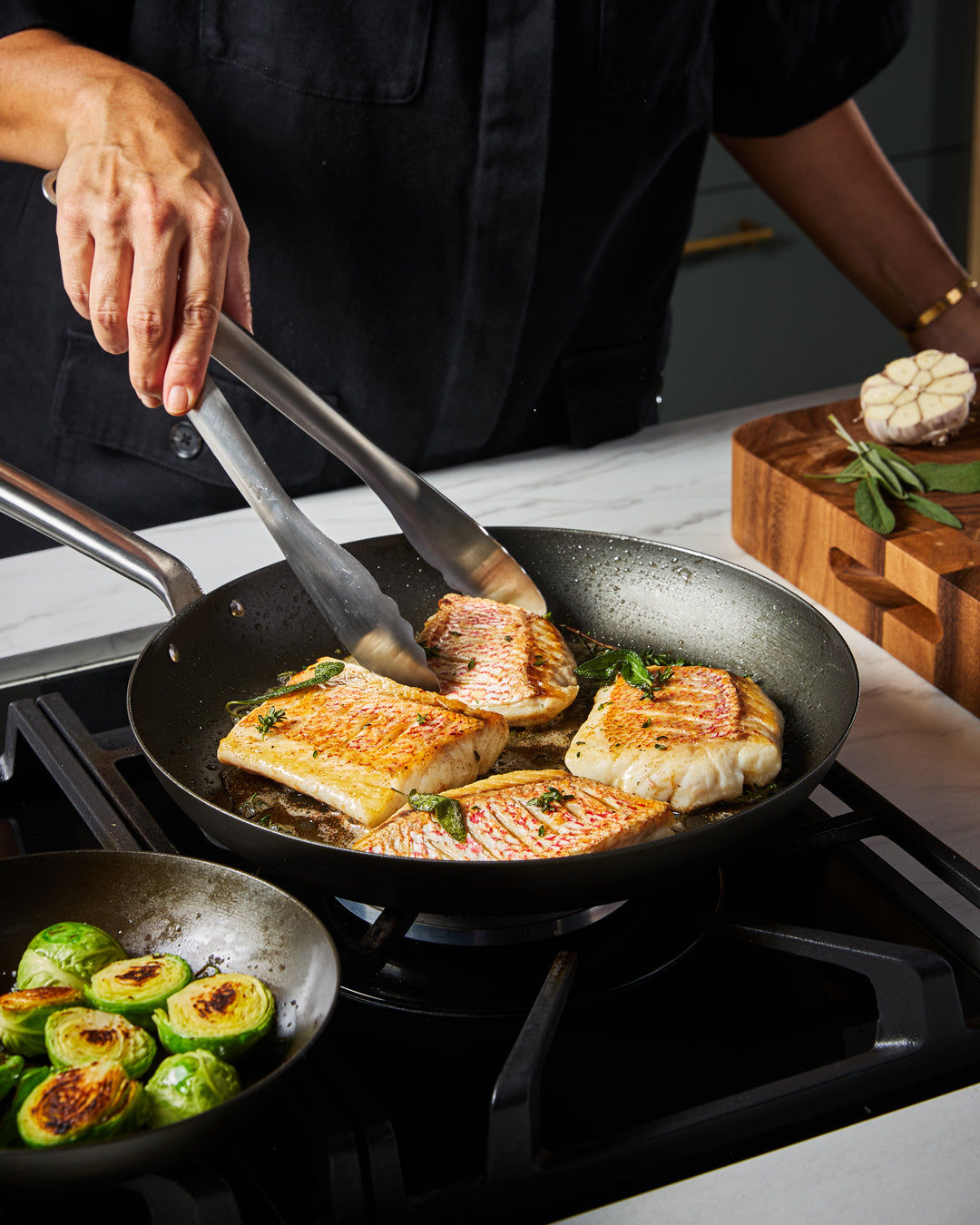
- Pan-frying
- Shallow frying
- Deep-frying (wok only)
- Sautéing
- Oven-roasting
3 tips for cooking
- Heat your pan or wok gradually. This enhances heat distribution, guards against hot spots and prevents warping.
- Only add oil after preheating; this enhances the non-stick qualities.
- Use utensils that can take the heat and that won’t scratch the surface: wood, metal or high-temperature silicone are ideal.
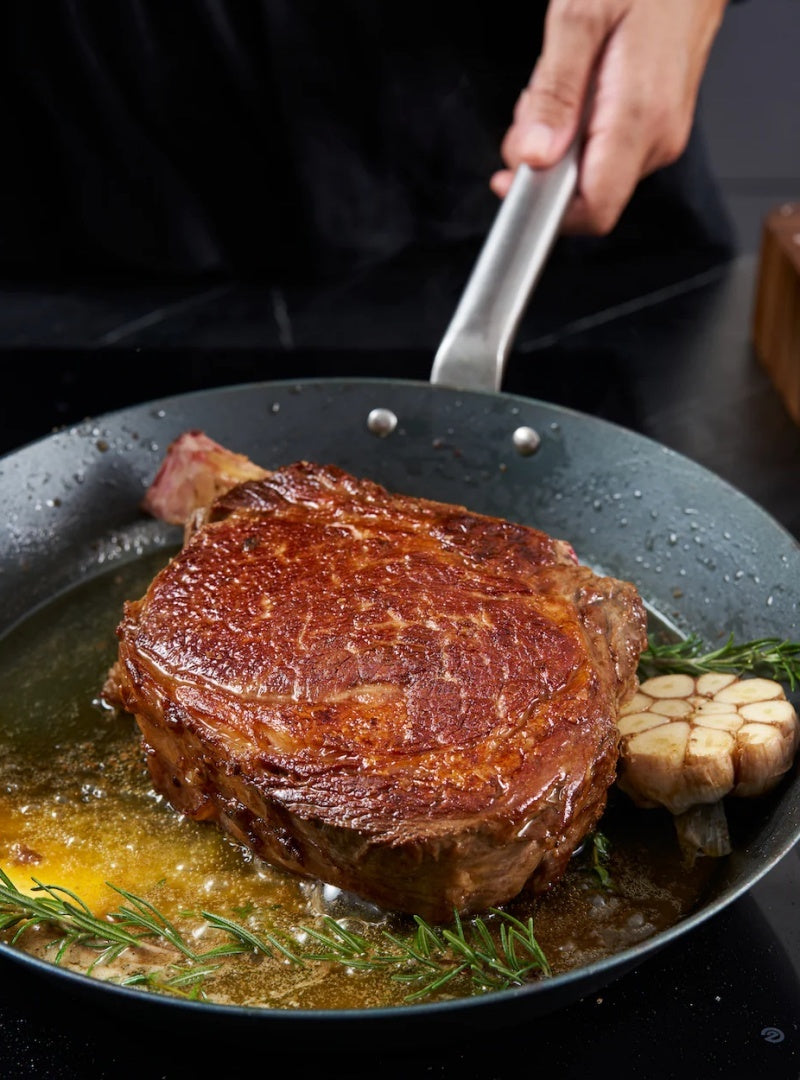
Is black carbon steel right for you?
This is the BIG question. Let’s be honest about it: this is pro-level equipment. Even pre-seasoned black carbon steel (like MAKO) needs TLC. Here’s what you need to consider:
- For the first 10-20 cooks you want to oil after every use (see the steps below)
- You’ll notice your pan gets to a point where it’s not necessary to oil after every clean. The patina will have more ‘gloss’ about it.
- BUT even once it’s at this point, we recommend you properly wash, dry and oil as often as you can. Get into the habit of it and you’ll be happy you have.
- Caked-on food can happen. Rust can happen. But all can be rectified with the right steps. Black carbon steel does not have a coating. It’s simply the raw material + patina layer. Removing caked-on food or rust may require you to scrub at the patina layer, but this is easily fixed as patina can be built and rebuilt at any time.
- Black carbon steel is made to perform, not look pretty. It’ll look patchy as the patina forms. It’s made for high heat, so you’ll find the hardware will colour too. All of this is perfectly normal and the sign of black carbon steel put to good use.
Carbon steel isn’t for everyone and that’s totally OK. Sometimes you want the convenience of non-stick, or the dishwasher-friendly stainless steel surface. Sometimes you want different tools for different times of the day! Choose the materials that best suit you and your cooking style.
TLC for a lifetime of use
How to clean black carbon steel
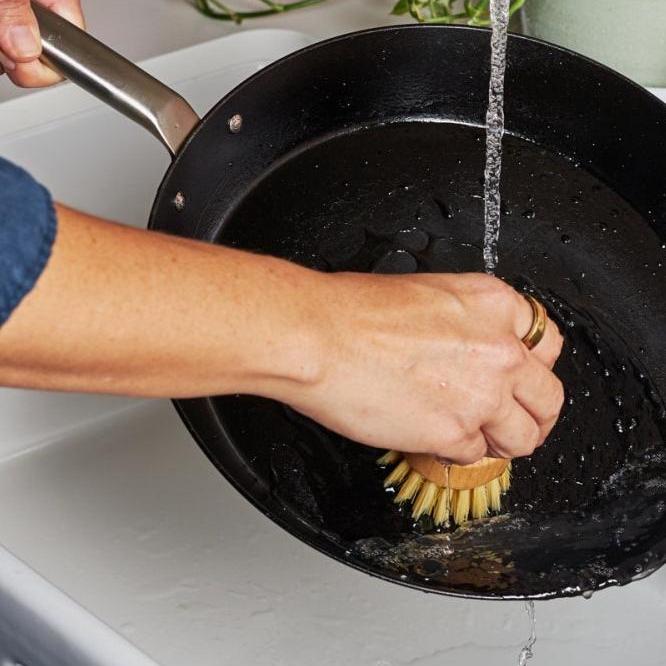
1
Let your pan cool down before cleaning with warm water, your brush and minimal detergent.
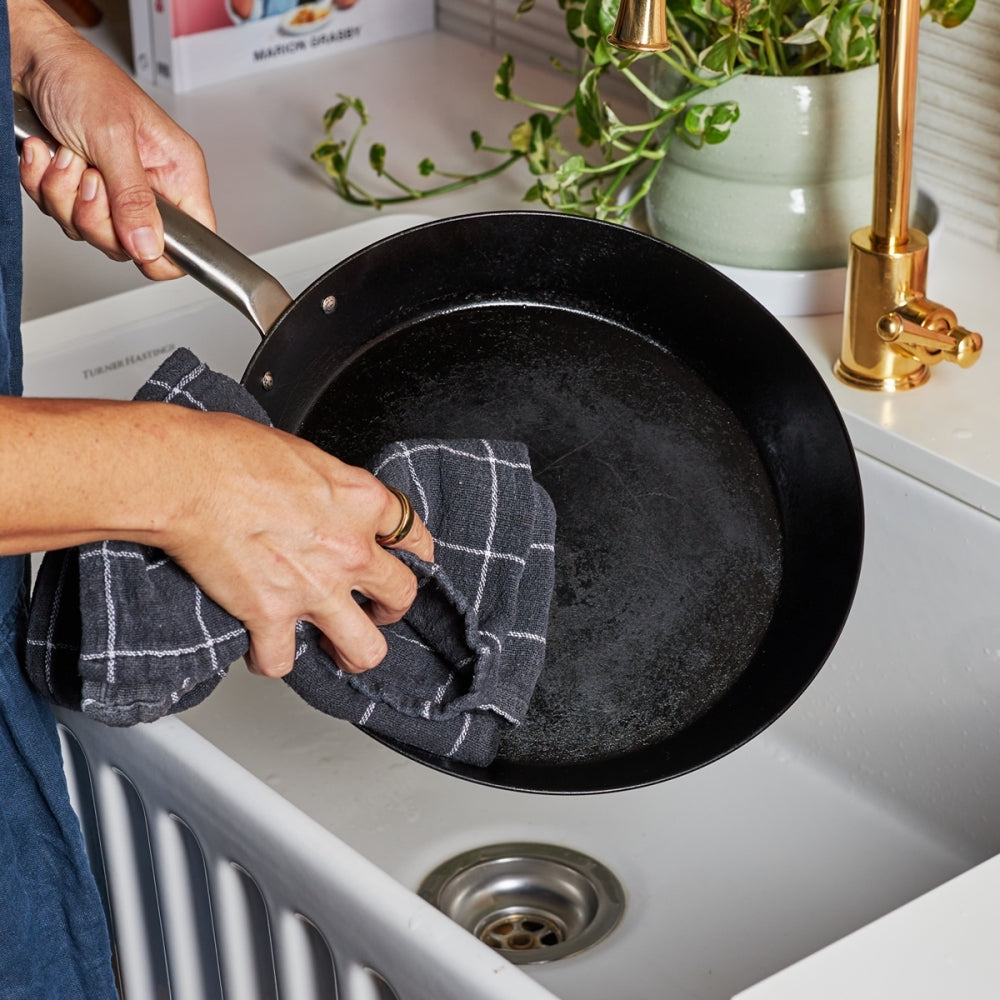
2
Once your pan is clean, rinse it and dry with a tea towel or paper towel.
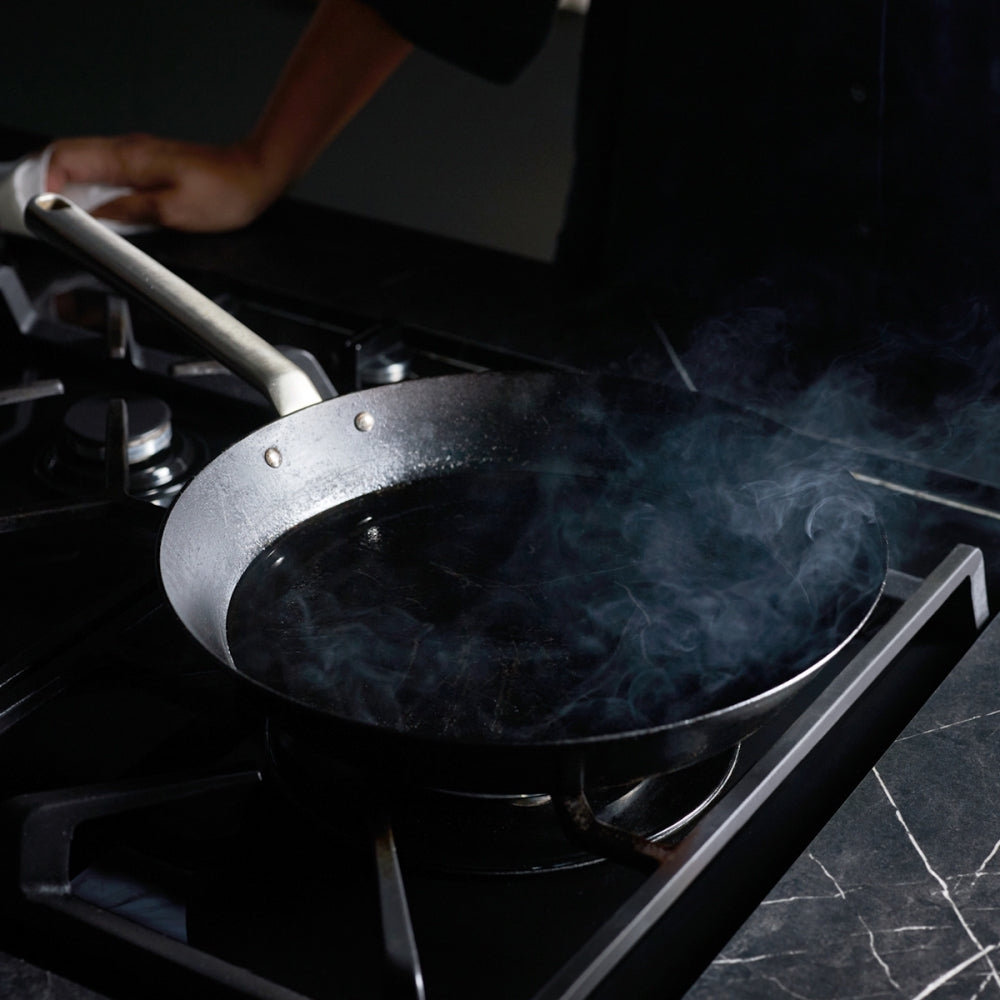
3
Heat your pan on your cooktop on a medium heat until you see light smoke appear.
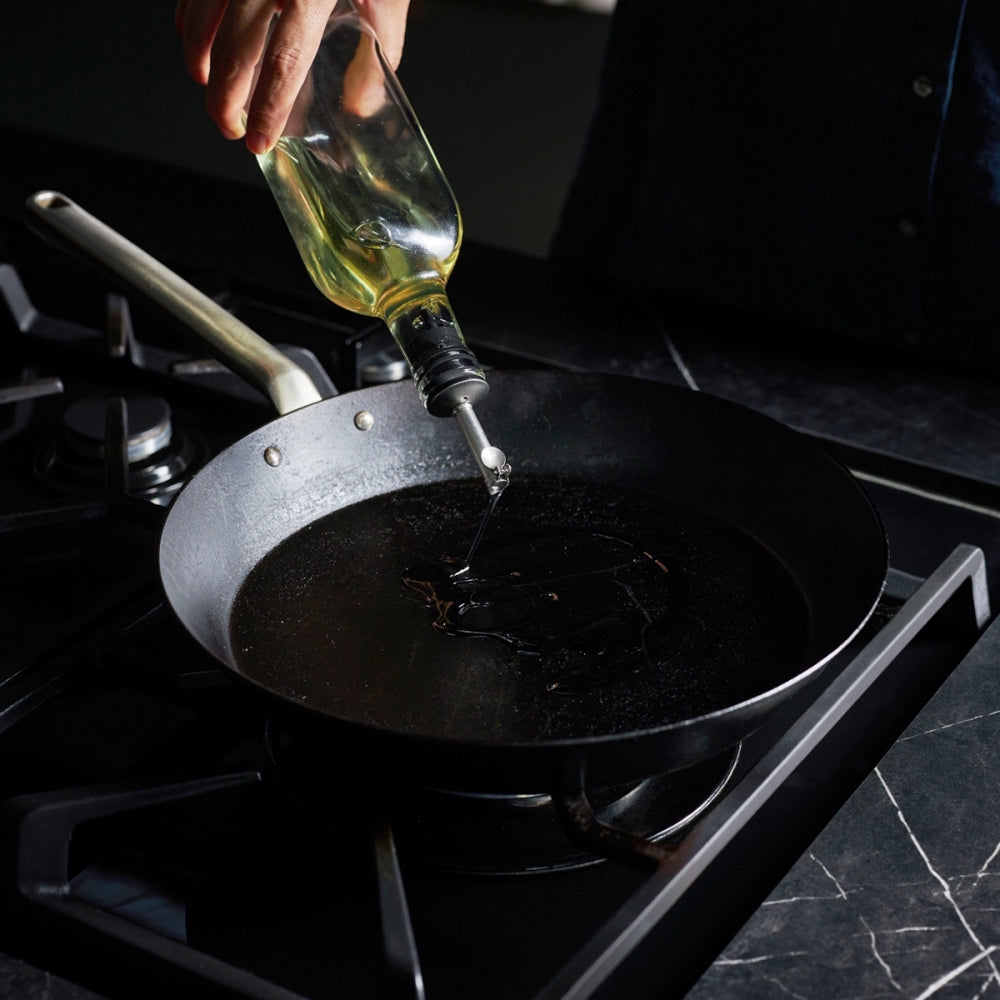
4
Add two teaspoons of vegetable oil to your hot pan.
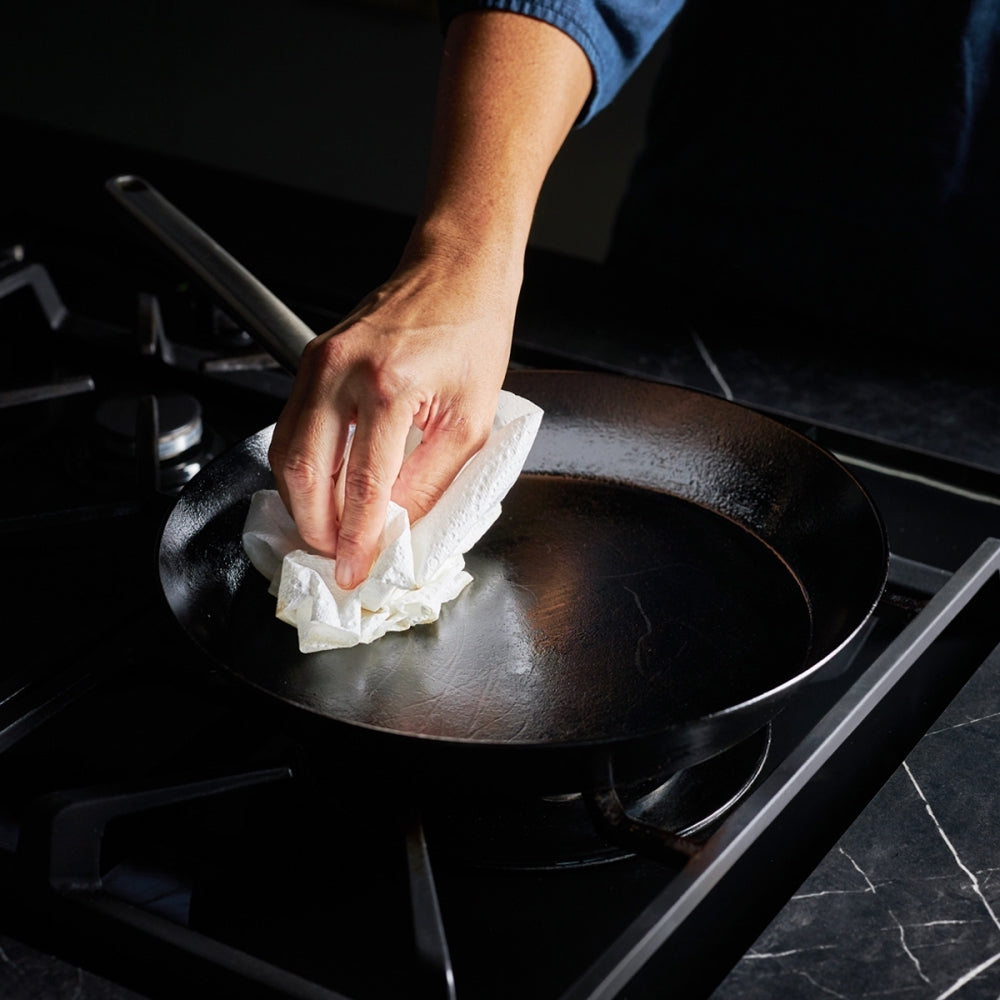
5
Use paper towel to (carefully) wipe the oil over the interior surface before taking your pan off the heat.
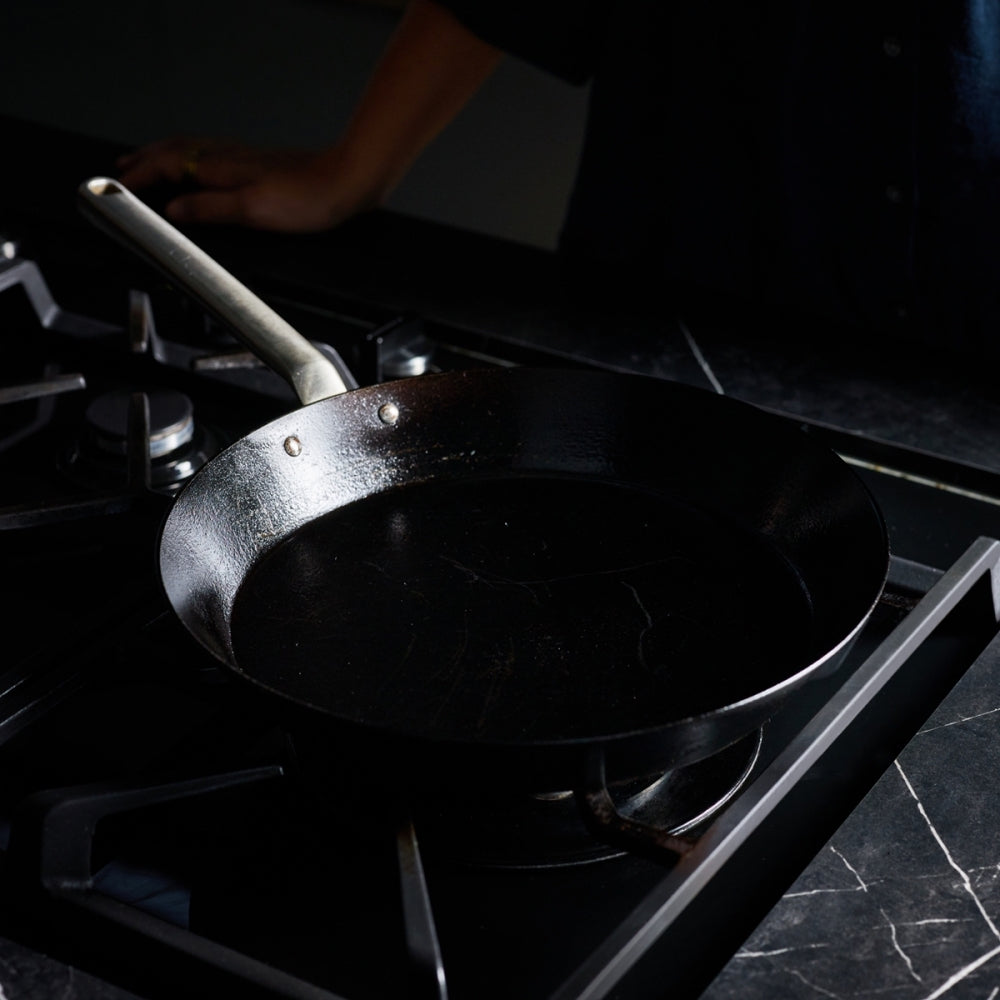
6
Store your pan in a dry place, careful not to stack other pans on top of it.
How to care for carbon steel pans
- Never use a dishwasher.
- Wash a cold pan in warm water to prevent thermal shock and warping (never put cold water in a hot pan).
- Use a sponge, brush, soft scourer or Sponge Daddy to remove any stuck-on bits; don’t scrub with anything harsh or you’ll damage the patina.
- Dry pans immediately after washing by heating until no moisture remains.
- Avoid stacking other pans on top of carbon steel when you store, unless using a pot protector or layers of kitchen paper for protection.
skip carousel





21% Off


$379.00$299.00
33% Off

$596.00$398.00
25% Off
Bestseller

$697.00$522.00
$149.00
44% Off
$448.99$249.00


$249.00
MORE READING

Steak with Café de Paris Butter
This Steak with Café de Paris Butter recipe is rich, savoury and seriously restaurant-worthy. Jui...
Continue reading

Shakshuka
This easy shakshuka recipe features soft-set eggs cooked in a rich spiced tomato and capsicum sau...
Continue reading

Skillet Brownie
This rich and fudgy Skillet Brownie is melted, mixed and baked entirely in the MAKO Black Steel M...
Continue reading